The 2-Second Rule: Why Passing Immediately After a Tackle Is Often the Wrong Choice
Your child's team keeps losing the ball right after stealing it. Here's why: their teammates need 2 seconds to adjust — and only elite dribblers can hold the ball long enough. Learn the tactical reality behind the transition moment.
Every parent has seen it: their child's team works hard to win the ball, and then — within one second — gives it right back with a wayward pass. The cycle repeats all game. Win the ball, lose the ball. Win the ball, lose the ball.
The instinct is to blame poor passing. But the problem is not the pass. The problem is the timing of the pass.
The Misconception
A common misconception in youth soccer is that a player should pass the ball the second they steal it. Coaches reinforce this constantly: "Get rid of it!" "Move it quickly!" "First-time ball!"
On the surface, this seems logical. The team just won possession — move the ball before the opponent can recover. Quick passing equals quick transitions equals goals.
However, tactical analysis shows that the moment of the tackle is usually the worst time to pass.
Here is why.
What Happens at the Moment of Transition
At the exact moment a player wins the ball by tackling or intercepting, consider what every other player on the field is doing:
Your teammates are actively marking opposition players. They are facing the wrong direction. They are engaged in defensive body positions. They are focused on the player they were tracking, not on receiving a pass.
The opponents are still in their attacking shape. They are positioned between your ball-winner and your teammates. They are — for this brief window — occupying exactly the spaces your teammates would need to receive a pass.
It takes at least a couple of seconds for those teammates to realize possession has changed, adjust their runs, and get open for a pass.
This is the two-second gap. And it is the graveyard of youth soccer possessions.
The Panicked Pass
What happens when a player who cannot dribble wins the ball during this two-second window?
They look up. Every teammate is marked. Every passing lane is blocked. The opponent they just tackled is already recovering and closing back in. The pressure is immediate and intense.
If the ball winner cannot dribble deceptively to hold the ball for those two seconds, they are forced to make a panicked, risky pass to a teammate who is still heavily marked.
The pass gets intercepted. Or it arrives at a teammate who is off-balance and facing the wrong way. Or it goes out of bounds because the only "open" space was off the field.
This is not a passing problem. This is a dribbling problem masquerading as a passing problem.
Why Deceptive Dribbling Solves Transition Play
This is exactly why we train our players to be elite, deceptive dribblers — they must have the confidence to hold the ball under intense physical pressure until their teammates are truly ready to receive it.
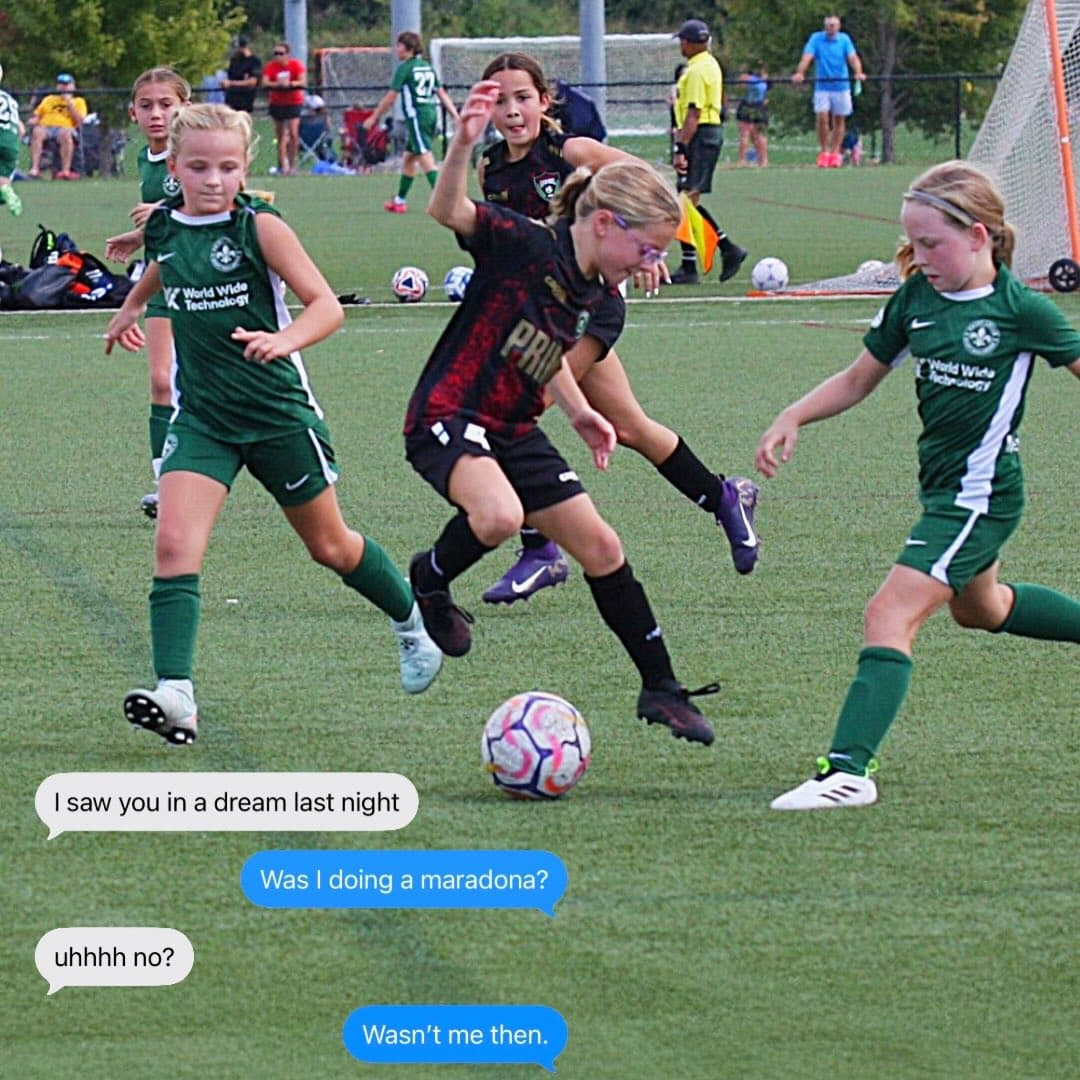
When a player wins the ball and has the ability to execute a creative dribbling move — a body feint, a Cruyff turn, a step-over that freezes the recovering attacker — they buy those critical two seconds. During those two seconds:
- Teammates recognize the change of possession
- Teammates begin making runs into open space
- Opponents transition from attack to defense, creating gaps
- Passing lanes that did not exist at the moment of the tackle suddenly open
The player who can hold the ball for two seconds transforms a chaotic, low-percentage moment into a structured, high-percentage attacking opportunity.
The Connection to Individual Development
This is one of the most concrete examples of why individual skill must come before team tactics. A coach can draw beautiful transition patterns on a whiteboard. But if the player who wins the ball cannot hold it for two seconds under pressure, every pattern is theoretical.
The transition moment is the ultimate test of individual dribbling ability because:
- The pressure is immediate — the tackled player is right there, desperate to win the ball back
- There is no support — teammates are still in defensive mode
- The space is tight — the ball was won in a contested area, not in open field
- The stakes are high — losing the ball here means an instant counter-attack
A player who can survive this moment with the ball — who can execute a deceptive move under maximum pressure with zero support — is a player who has been trained in exactly the way we train at KC Legends.
What This Looks Like in Practice
In our training sessions, we create scenarios that specifically replicate the transition moment. Players practice winning the ball in tight spaces and then holding it under pressure for two to three seconds before any passing option is available.
We do not tell them what move to use. We have trained them with a repertoire of creative skills, and in the transition moment, they select the right one instinctively. A shoulder drop to create space. A Maradona Turn to reverse direction. A quick acceleration into the gap the recovering defender left behind.
The key is that the player has the ball on a string. They are not panicking. They are not looking to dump the ball to a teammate who is not ready. They are relentlessly moving forward, holding possession, and waiting for the right moment — not the first moment — to combine with a teammate.
The Bigger Picture
The two-second rule reveals something fundamental about how soccer actually works at the highest level. Watch any elite team — from Barcelona to the Brazilian national team — and you will see that their best transitions are not the fastest ones. They are the ones where the ball-winner holds possession just long enough for the team shape to reorganize.
Players like Andres Iniesta and Zinedine Zidane were not great because they passed quickly after winning the ball. They were great because they could receive the ball under any pressure, in any area of the field, and hold it with absolute composure until the optimal moment to release it.
That composure comes from one place: thousands of hours of individual dribbling practice under pressure. There is no shortcut and no tactical workaround. The two-second gap can only be bridged by a player who genuinely trusts their ability to keep the ball.
Frequently Asked Questions
Why does my child's team always lose the ball right after stealing it?
At the moment of a tackle, your child's teammates are still in defensive positions — marking opponents, facing the wrong direction, and unable to receive a pass. It takes about 2 seconds for them to adjust. If the ball-winner cannot dribble and hold the ball during this gap, they are forced into a panicked pass to a marked teammate, resulting in immediate turnover.
Should youth soccer players pass immediately after winning the ball?
Usually not. The moment of the tackle is often the worst time to pass because teammates are not yet positioned to receive. Players need the ability to hold the ball for 2-3 seconds using deceptive dribbling until passing lanes open and teammates adjust to the change of possession. Quick passing only works when teammates are already in position.
How do you train youth players for transition moments in soccer?
At KC Legends, we create practice scenarios that replicate the transition moment — winning the ball in tight spaces and holding it under pressure before any passing option is available. Players use their trained repertoire of creative dribbling moves to buy time, and learn to wait for the right moment to pass rather than the first moment.
What skills does a player need to hold the ball during transitions?
A player needs confidence under pressure, a repertoire of deceptive dribbling moves (body feints, turns, step-overs), the ability to shield the ball from recovering opponents, and the composure to resist the urge to pass to a marked teammate. These are all individual skills developed through focused 1v1 and 2v2 training.
Topics