From Robots to Show Time: Why We Let Our Players Go For It
A legendary wrestling coach's revelation about restricting athlete creativity applies directly to youth soccer. Learn why KC Legends rejects the 'robot' approach and gives players unscripted freedom to take creative risks on the ball.
Many youth soccer programs operate under the belief that discipline means forcing players to only make the "safest" plays. Coaches drill passing sequences, demand positional discipline, and bench players who attempt creative moves that do not work. The logic seems sound: reduce mistakes, increase consistency, win more games.
But is restricting creativity actually helping players win in the long run? Or is it turning them into something far worse — robots who can execute instructions but cannot think, create, or adapt?
The Wrestling Coach Who Changed Everything
Howard Ferguson was a legendary high school wrestling coach who won seven National Championships. By any measure, he was one of the most successful coaches in American sports history. But early in his career, he made a mistake that nearly every youth soccer coach makes today.
Ferguson forced his wrestlers to practice a short checklist of high-percentage moves and restricted them to doing things "our way." The logic was identical to what we hear in youth soccer: master the basics, eliminate risk, execute the proven plays.
It sounded good in theory. But Ferguson realized something profound: he was restricting their individual talents and making them robots.
His wrestlers could execute the moves on the checklist. But they could not improvise. They could not adapt to unexpected situations. They could not use the instincts and talents that made each of them unique. They were technically competent and creatively dead.
The "Show Time" Transformation
When Ferguson and his coaching staff finally decided to change — to let the athletes use their own instinct, have fun, and "Go For It" — the results were astounding.
Matches turned into "Show Time" performances based on gut instinct. Wrestlers began executing moves that the coaching staff had never taught them. They combined techniques in ways that no playbook could have anticipated. They became unpredictable, dynamic, and electrifying.
And they became better than Ferguson ever deemed possible.
Not despite the freedom — because of it. The creative latitude unlocked talent that rigid instruction had been suppressing. The athletes were the same people with the same physical abilities. The only thing that changed was the coaching philosophy.
The Soccer Parallel
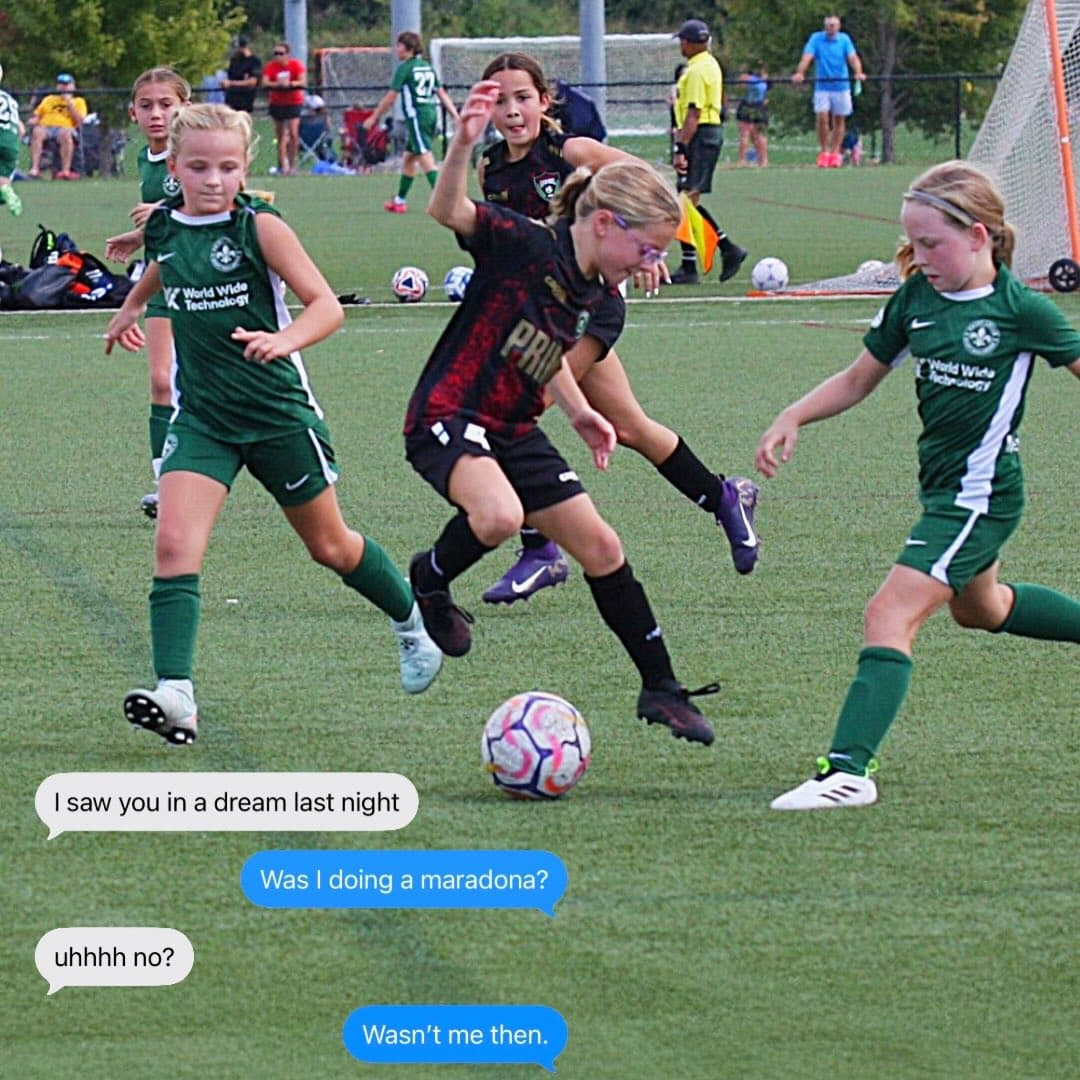
In our soccer program, we apply this exact same philosophy. Instead of creating rote-brainwashed passing robots, we allow our players the unscripted freedom to take risks, dribble, and rely on their creative genius.
This is not a casual decision. It is a deliberate coaching philosophy built on 35 years of evidence:
The Robot Problem
When coaches restrict players to "safe" plays — pass immediately, stay in position, do not attempt the dribble — they create players who:
- Cannot solve individual problems. When the memorized play breaks down, the robot has no backup plan.
- Fear mistakes. Every creative attempt carries the risk of failure, and failure has been punished out of them.
- Depend entirely on teammates. They have no individual escape route when defenders close passing lanes.
- Plateau early. Safe play creates a ceiling that the player can never break through because creativity — the skill that separates good from great — was never developed.
The "Show Time" Solution
When coaches give players creative freedom within a developmental framework, they create players who:
- Solve problems in real time using instinct and improvisation
- Embrace mistakes as learning opportunities rather than failures
- Take responsibility for the outcome rather than transferring it to a teammate
- Continue improving throughout their career because creativity has no ceiling
"Go For It" in Practice
At KC Legends, "Go For It" is not just a slogan. It is a training methodology:
- Creative dribbling is the expectation, not the exception. Players are expected to attempt moves, take on defenders, and try the difficult option.
- Mistakes are celebrated when they come from creative attempts. We acknowledge the courage before we coach the technique.
- Passing as an escape is discouraged. We train players to recognize when they are passing because it is the right tactical decision versus when they are passing because they are afraid to dribble.
- Individual expression is the goal. Just as Ferguson's wrestlers developed their own signature moves, our players develop their own creative identity on the ball.
The result is players who perform, not players who execute. There is a profound difference. Execution is following a script. Performance is creating in the moment — reading the situation, trusting instinct, and doing something brilliant that no coach could have planned.
The Courage Transfer
The most important outcome of "Show Time" coaching has nothing to do with soccer. A player who has been trained to attempt the creative dribble in front of teammates, opponents, coaches, and parents — and to keep attempting it even when it fails — is a player who has practiced courage hundreds of times.
That courage transfers. It shows up in the classroom, in job interviews, in relationships, and in every situation where the safe option and the right option are not the same thing.
Howard Ferguson did not just produce better wrestlers when he let them "Go For It." He produced better people. That is exactly what we aim to do at KC Legends.
Frequently Asked Questions
How do you unlock a youth athlete's true potential?
True potential is unlocked by giving athletes creative freedom within a structured developmental environment. Restricting players to safe, predictable plays caps their development by suppressing the individual instincts and creativity that separate good from great. The key is building individual technical skill — especially creative dribbling and finishing — while encouraging risk-taking and treating mistakes as learning opportunities rather than failures.
Why do some soccer coaches restrict player creativity?
Most coaches restrict creativity because it produces short-term results. A team that only passes and stays in position makes fewer visible mistakes and often wins games at young ages. But this approach creates dependent players who plateau when they face opponents with genuine individual skill. The coaches are prioritizing this Saturday's score over the player's long-term development — a trade-off that Ferguson's wrestling experience proves is ultimately self-defeating.
What does "unscripted freedom" mean in youth soccer training?
Unscripted freedom means players are encouraged to make their own decisions on the ball — to attempt creative dribbles, try unconventional moves, and solve problems using instinct rather than memorized patterns. It does not mean chaos. It means building strong individual technical skills through deliberate training and then trusting players to use those skills creatively in game situations, rather than dictating every decision from the sideline.
How does creative soccer training build character?
Every creative attempt on the ball is an act of courage. The player is choosing the difficult, visible, potentially embarrassing option over the safe, invisible one. Repeating this choice hundreds of times across a season builds a habit of taking responsibility and embracing risk. This transfers directly to life situations — from classroom presentations to career decisions — where the safe option and the right option are rarely the same.
Ready to let your player "Go For It"? Register for tryouts or learn more about our training philosophy.
Topics