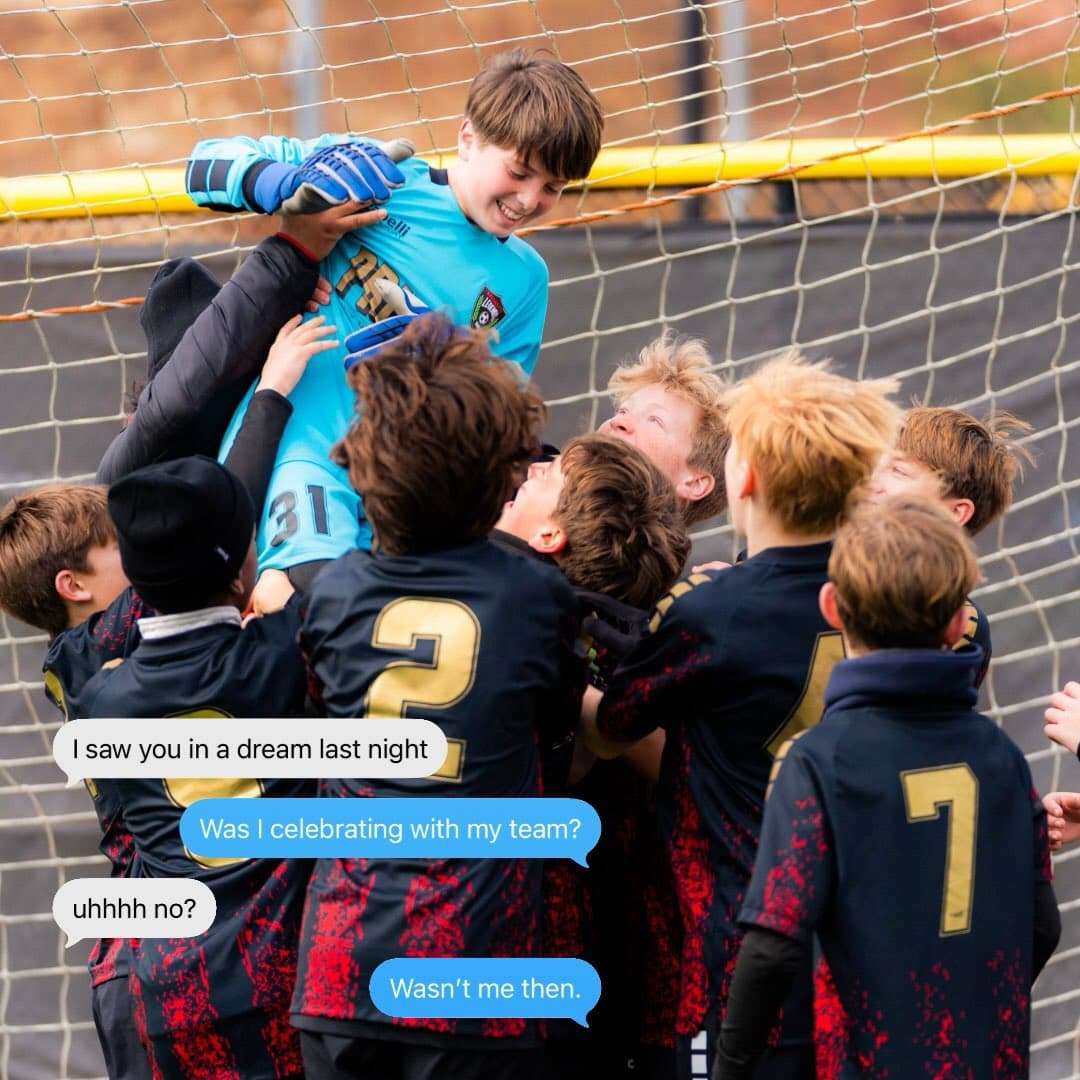
Character Development: The Greatest Benefit of Youth Soccer
How KC Legends uses soccer to build character, resilience, and leadership in young players. The life lessons learned on the pitch last far beyond the final whistle.
When parents ask me what their child will get out of a season at KC Legends, the first answer I give is not fitness, not college scholarships, and not competitive wins — though we deliver all of those. The first answer I give is character.
After 35 years of coaching youth soccer, I am convinced that the greatest gift the sport gives a child is not athletic. It is the set of qualities that determines how she handles adversity, responsibility, and the expectations of others for the rest of her life.
What Soccer Actually Develops
A good youth soccer program develops multiple dimensions of a player simultaneously:
- Physical: speed, endurance, coordination, balance, and spatial awareness
- Technical: ball control, dribbling, finishing, passing, and defending
- Cognitive: decision-making under pressure, reading the game, and problem-solving in real time
- Social: communication, teamwork, and leadership
- Character: resilience, courage, personal responsibility, and self-concept
Most clubs talk about the first four. At KC Legends, we make the fifth one — character — explicit. We design training sessions to develop it intentionally, not just hope it emerges as a side effect.
Why Dribbling Builds Character
This may surprise you: the most powerful character-building tool in soccer is the simple act of trying to dribble past another player.
Think about what that moment asks of a child. She has the ball. A defender is in front of her. She can pass it off — safe, easy, unremarkable — or she can attempt a creative move with all eyes on her. If she tries and fails, everyone sees it. If she tries and succeeds, everyone sees that too.
"Dribbling is one skill where the player has to walk tall, take a leadership role, and attempt to make something special happen with all eyes upon them."
That is not a comfortable place for most children. And that discomfort is precisely where character grows. Every time a player chooses to attempt the move rather than give the ball away, she is practicing the act of taking responsibility. Over hundreds of repetitions across a season, that habit becomes part of how she approaches challenges — in school, in relationships, in her eventual career.
The Success of Failure
One of the most counterintuitive lessons we teach is what I call the Success of Failure. Parents in the stands — understandably — wince when their child loses the ball trying something ambitious. That reaction, multiplied over time, teaches kids to avoid risk.
We teach the opposite. Mistakes are friends. They are the most precise feedback a player can receive. A mistake tells you exactly what the gap is between your current skill and where you want to be. A player who never makes mistakes on the soccer pitch is a player who is never attempting anything at the edge of her ability. That is not development — it is stagnation dressed up as performance.
In practice, this means our coaches acknowledge the attempt before they coach the outcome. A player who tries a stepover and gets dispossessed hears: "Good — you went for it. Now let's look at the weight of your touch going into the move." A player who never attempts the move at all hears a different conversation about courage.
Over time, players learn that the cost of trying and failing is low, and the benefit — actual improvement — is high. That belief transfers directly to how they approach hard things off the field.
Equal Playing Time and Self-Concept
At KC Legends, every player plays. This is not sentimentality. It is development science.
Equal Time = High Self-Concept = Maximum Potential
Self-concept — the belief a child holds about her own capability — is one of the strongest predictors of long-term athletic and academic performance. A player who sits on the bench for most of a season receives a clear message about her perceived value to the team. That message settles into her self-concept, and it limits what she will attempt.
When every player gets meaningful time on the pitch, every player receives the message that she belongs, that she is trusted, and that she is expected to perform. The cumulative effect of that message — delivered consistently over multiple seasons — is a player who carries herself differently. On the field and off it.
What These Lessons Look Like Off the Field
Parents who have had children in our program for multiple seasons consistently report the same observation: the qualities their kids develop in soccer show up everywhere else.
The child who learned to attempt a move and recover from failure becomes the teenager who raises her hand in class when she is not sure of the answer. The child who learned to take responsibility with the ball at his feet becomes the young adult who steps up in team projects rather than waiting for someone else to lead.
These are not accidental outcomes. They are the direct result of training environments designed to build character alongside skill.
If you want to raise a child who is resilient, who takes responsibility, and who leads rather than follows, soccer — done right — is one of the most effective tools available. At KC Legends, "done right" means character development is not a byproduct. It is the point.
Frequently Asked Questions
How does soccer build character in children?
Soccer places children in repeated high-pressure situations that require individual decision-making, risk-taking, and recovery from failure. When coaches frame mistakes as learning opportunities and reward courageous attempts rather than just successful outcomes, players develop resilience and the habit of taking personal responsibility — qualities that transfer directly to academic and professional life.
What life skills do kids learn from playing competitive soccer?
Players in well-designed programs develop leadership (making decisions under pressure), resilience (recovering from mistakes and setbacks), accountability (owning the outcome of individual actions), communication (coordinating with teammates in real time), and self-confidence (believing in their ability to contribute). At KC Legends, these outcomes are intentionally reinforced through our coaching approach rather than left to chance.
Why does KC Legends emphasize equal playing time?
Equal playing time ensures every player receives the message that she belongs and is trusted to perform. A player's self-concept — her belief in her own capability — is shaped by how she is treated in practice and competition. Players who play develop; players who sit on the bench learn to accept a limited role. We build maximum potential by giving every player the opportunity to grow.
Interested in raising a player who leads on and off the pitch? Explore our Club Premiere program or register for tryouts.
Topics